Atul Goyal

Blog

  • Say Hello to Sameeksha, from Kalpa

    Meet Sameeksha, from Kalpa. She’s three yr old. We call her Simi, and she calls me Mamu. Simi is so dear to her parents that her Mom and Dad have told me so many stories about how she’s so important for them including the fact that they had planned her name which is a combination of the Mom and Dad’s name, if the baby turns out to be a girl which they really wanted, and that her birth date being 14th Feb is God’s gift to them.

    So Monday is her first day at school and we both have been running through alphabets and numbers for past few days, and she seems to be more than ready to start this journey we call schooling. She loves her yellow-pink bag which has a one eyed fish and tells me different stories about where the second eye went. She almost eats a page from her shiny new books when she sees a picture of a fruit against some alphabet. Heck, she also makes me eat those imaginary fruits! 😀 She’s so shy of getting photographed but loves seeing the photos I capture, so much that she tells me “Mamu ye to doggies hain. Ye wala photo achcha hai. Mamu ab moon ki photo dikhao. ab pahaad dikhao. ab baraf dikhao…” and gets this huge smile when she sees her own photos.

    As my time to move out of Kalpa was approaching, I wanted to gift her something. The dinner conversations with the family, the hardships of life in the remote mountains I’ve seen, did help me deciding what it’d be. And her parents, after some convincing, have been generous enough to allow me to do this. So I’ve taken up all her educational expenses. When I talked to her Dad about it, the first question he asked me – Simi rahegi to hamare paas hi na? I almost cried. Ofcourse she will!

    More than for Simi I think I’m doing it for myself. The thought of keeping this promise, year after year might just help me have an even stronger sense of mission in what I do. I might need to cut down on my personal expenses here and there and drop some luxury. Being able to support a kid’s education is surely worth lot more than any of that.

    Her Mom – I call her didi – asked me to stay in Kalpa at least till Monday to see her go school. And I’m here till then. Hope to see a day when all of the Indian society stops discriminating against the girl child and a girl’s education becomes equally important just like how it is for Simi’s parents. Love you Simi!


  • Why I took a sabbatical from my great going job.

    [This post, my reflection on why I’m doing what I’m doing, is in part inspired from Simon Sinek’s Start with Why.]

    “Why did you want to climb Mount Everest?”

    “Because it’s there”.

    That was the answer, a truthful retort, by the mountaineer George Mallory, which has since become a popular quote in mountaineering.

    I certainly don’t speak for all the adventure lovers out there, but to me personally, the reason I undertake challenges and adventures has evolved to go a bit beyond that.

    The challenges of startup life, with the obvious responsibilities that come along with the sense of satisfaction of making an impact in people’s lives, is – probably a bit counter-intuitively – addictive and also a real adventure in itself. Having been part of a startup right from its very early days, going through a journey which can be easily compared to a roller coaster ride full of super highs and lows has made me so used to looking for adventures that this was exactly the trigger that made me go on my first long trek – a month-long solo trek around the Annapurna Circuit and Annapurna base camp in Nepal, last year.

    With time, as MobiKwik grew and “I” grew with the growth of the company, I also met so many amazing people, many of whom I myself recruited. The whole journey has been an amazing learning experience and while starting-up was a difficult decision to make, what helped me was that I was allowed to take a sabbatical by my boss-cum-mentor while I find my way through this new adventure.

    The travels through those remote regions have been eye opening, a soul shaking experience for me. I got to see life in the remote regions, full of little moments of joys even amidst the extreme hardships. So much of what we take for granted back home in our city life, becomes a luxury in the remote regions. I’ll be honest and admit that there have been moments which were more like a question of survival than a blissful adventure. You don’t want to be in no man’s land, alone, out of water, out of breath, carrying your backpack, and clouds darkening every moment, not having any option but to keep pushing yourself a tiny bit more, and then some more.

    This was the beginning of a chain reaction. That journey through Annapurna region in Nepal was followed by me embarking more solo journeys through Markha valley, Spiti valley and some of the north-eastern states eventually lasting as long as 100 days of my time spent in the mountains, in 2016.

    While in the mountains, I had also been using the free time to think through an idea that I had been very excited about for a long time, which was to create an artificial intelligence – inspired by Jarvis – to help people “discover stuff” easier in a personalized manner.

    I had been thinking through and doing some MVPs with close friends on this and while there were some things that I needed to think through in more detail, in retrospect it was more like a “childhood crush” of mine. While I was refining the idea, I was hit by this another opportunity of solving a problem that I personally faced frequently, before and even during the travels, and could also get it validated with other travelers, during the discussions with several of them, whether seasoned or first timers.

    The gist is that I believe there is a huge scope of improvement in the way we discover travel destinations and do the further research required to make the travel a memorable experience. This is a space which I very closely relate to, and feel very passionate about. Any impact that I make here, whether it’s saving the time of travelers, helping them have a better experience or making a meaningful impact on the lives of people dependent on tourism as their sole or primary livelihood, would give me huge satisfaction.

    I’m currently in the process of listening to people I’m meeting, understanding the different problems much better and taking feedback on quick prototypes I’ve been building with which I do believe the travel research can be upgraded in a big and meaningful manner. So that’s what the website will do, it’ll serve as a travel guide and help with travel research.

    While currently, I’m mostly taking feedback in private, refining the focus, I hope to come out with an initial product in a few months time.

    PS: By any chance, is travel something that really excites you? Would love to chat!

  • 2016 – My 100 days in the Himalayas, Part-1

    I’m feeling thirsty as I make my way on a narrow path, towards the destination I’m aiming to reach today. There is fresh snow as far as eyes go. It’s onset of Spring here in Annapurna region of the Nepal Himalayas. What an amazing time to be here.

    At one place a few feet away, there are footsteps of some animal, clearly visible on the snow. Very likely, it walked across just the same morning. They don’t look like that of snow leopard, though. I’m still optimistic. I keep looking. One sight of that elusive creature will make my day!

    My dry throat draws my thoughts back to the thirst. I get reminded of this line from Samuel Taylor’s ‘The Rime of the Ancient Mariner’

    Water, water, everywhere,
    Nor any drop to drink.

    I turn back. Down to see the Machapuchare base camp (MBC) checking if anyone else is coming. I could use help with some water. There is none. The Machapuchare – literally meaning “fish tail” owing to its resemblance to the tail of a fish – stands tall back there. The near vertical slopes can’t hold any snow so it’s standing there with most of the top edges naked. It is a sacred mountain. Climbing it is not permitted. What a view from where I stand. Coming back to reality, I have considered the worst case scenario of walking back to MBC, in case I don’t seem to make it to the Base camp of Annapurna (called ABC, in short).

    I look into the side pocket of my camera bag, only to find the wrapper of last chocolate I ate somewhere before MBC. Could use some instant energy. I find some dry fruits stashed in a corner of the backpack. Munch a few cashew nuts. Having had this rest for a few minutes, I gain some strength and start walking again. The clouds have started gathering up. Just like past several days. I know it’ll start snowing anytime. This has been happening every day for last so many days. Which is a signal that I have to make it to the ABC without losing any time!

    I’m able to see base camp far from where I stand but it’s been tough few hours and I still seem to be getting nowhere close. I am counting 10 steps. Followed by stopping to catch my breath. The process keeps going on. Whenever I see a bit less steep walk ahead, I try counting to 20 steps but anything more makes breathing difficult. I’ve been hiking for more than last 20 days now – around the full Annapurna circuit – but today feels different. I tell myself that it’s a marathon, not a sprint…

    As the base camp looks within reach, the snow has started falling. And it’s getting windy. The snow is not too heavy yet, but I can’t waste any more minute now. Survival instinct. Gives you energy you didn’t know you had. I guess, this is something hard-coded in the DNA of all life in the world. I can’t have any complaints, because it works.

    Finally, at the end of the “marathon”, the jaw-dropping south face of Annapurna reveals itself.


    Annapurna - south face


    [Photo from the next morning] The incredible view with the morning sun hitting the south face of Annapurna I – an eight-thousander, the highest peak of the Annapurna massif – makes it all worth it. It stands there in all its grandeur. Massive. Beautiful. Inspiring.


    This is just one of those 100 days from my journeys in the mountains this year. Every other day brings new adventures up here.

    Nepal, Ladakh, Spiti and Sikkim. Places on the map of my solo trip in the mountains in 2016.

    Himalayas. This is my home away from home. This is where I truly feel alive. All these journeys have been full of new learnings every day. Meeting new people every day, from diverse backgrounds and varied cultures, and having conversations on different topics with them, is an enlightening experience for me. Shatters a number of pre-conceived notions we all have about other places and the people living there. Then there is nothing like the amazing views you get to see. Getting completely undisturbed long stretches of time, whether that’s in amazing stays such as Zostel Spiti or remote homestays of Markha valley or Annapurna circuit, provides a great time to catch up with my reading. Far away from the hectic city life, there is something about the disconnect here. It helps to make a better connect with myself.


    This brings part-1 to an end. Hope you liked it. I’m still trying to improve my storytelling, so love your feedback. Will continue with the other highlights of the journey in Nepal and from the rest of the Himalayas in subsequent posts.

    So friends, what are your travel plans, in 2017? Let me know in the comments below. Cheers to a new year, to another year full of adventures!

  • My favorite book reads of 2016

    At the start of the year, I had set a target of reading 12 books for the year. Thanks to Kindle, which makes reading an even more convenient and enjoyable experience, I was able to progress faster than what I planned. Below are the top 5 books I read, that I’d strongly recommend to everyone. I hope my brief review also helps you deciding whether these are meant to be in your reading list or not.


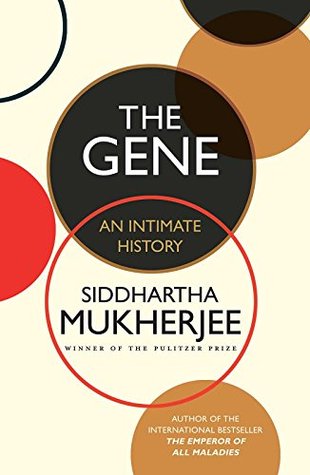
    1. The Gene: An Intimate History The Gene

    But can humans responsibly “enhance” our own genomes? – Siddhartha Mukherjee

    This book is an amazing read about the basic unit of heredity that all of us are carrying hidden deep inside the building blocks of our body. Grasping the contents does NOT need any serious biology background and it’s a great read explaining how evolution occurred, how similarities and differences surfaced as part of the evolution.

    A gene in the biological world, as described by the author is much like atom and byte in the physical and computational worlds. All three are fundamental to the understanding of those respective worlds.

    The author goes in depth about several hereditary diseases, treatment case studies and even picks examples of hereditary diseases affecting people close to him. To summarize, the whole book is about past, present, and future of genetics – the study of heredity. It’s amazingly written!


    2.  The Hard Thing About Hard Things: Building a Business When There Are No Easy Answers

    The struggle is where greatness comes from. – Ben Horowitz

    In this amazing book, Ben Horowitz walks the reader through his experiences of building his companies and the challenges he faced during the journey. This book is about his opinions on what to be careful about when dealing with ‘hard things’ as that’s the hard thing about hard things – there is no recipe for dealing with them. The author reasons that the hard thing isn’t dreaming big. The hard thing is waking up in the middle of the night in a cold sweat when the dream turns into a nightmare.

    This is a book which I’d recommend to every person in the tech industry in general, and people in tech startups in specific. It gives insights into various things which, especially early in your career, are NOT intuitive. This gives a glimpse of situations from both sides of the table. It’s a must read for managers!


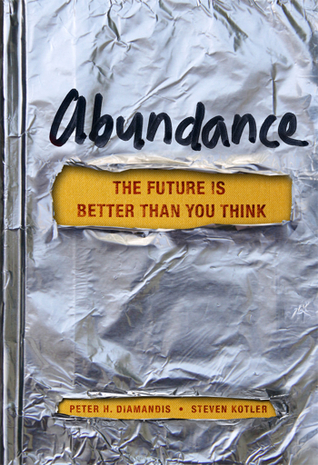
    3. Abundance: The Future is Better Than You Think

    For the first time in history, our capabilities have begun to catch up to our ambitions. – Peter Diamandis

    As the title suggests, this book depicts a future full of an abundance of everything which we face scarcity of, at present. The authors walk you through recent innovations and those that are underway. And how using them we can solve world’s biggest problems.

    The authors focus on exponentially growing technologies which have already started showing an enormous impact on basic needs such as food, water, energy, healthcare and education. Many of the problems the world faces today are inter-connected, such as, availability of energy (electricity) reduces burning of biomass resulting in a radical improvement in health, ecology, and also frees women and children from gathering biomass providing more time for people to get jobs and education, allowing more and more people to come out of poverty at a fast rate.

    With all the optimism, the book balances the rosy picture by walking you through challenges we’re likely to face with the exponentially growing technologies. Challenges such as Bioterrorism, Cybercrime, Robotics and AI-induced unemployment.


    4. Zero to One: Notes on Start Ups, or How to Build the Future

     What important truth do very few people agree with you on? – Peter Thiel

    This masterpiece by Peter Thiel is about how to build companies that go from 0 to 1 – creating something new. Peter, based on his experiences of being a co-founder (of Paypal and Palantir) and investor in startups (which includes Facebook and SpaceX, besides hundreds of others), shares the patterns he has noticed.

    The book is mostly about how startups usually differ from big companies, how a small group of people can innovate faster than big dysfunctional companies and eat into their business, and how entirely new markets get created.

    Peter stresses that building a monopoly is the easiest way which benefits everybody and creates sustainable profits for the creator. Every monopoly is unique, but they usually share some characteristics such as proprietary technology, network effects, economies fo scale, and branding. He discusses how to get there by starting in a niche and scaling up from there.


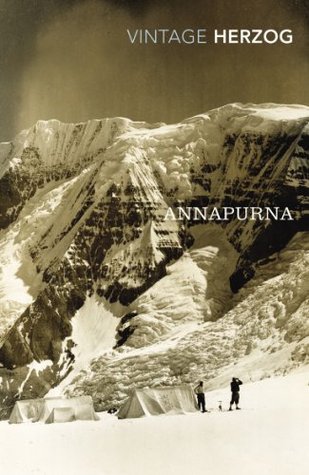
    5. Annapurna: The First Conquest of an 8000-Metre Peak

    It is possible to win against all the odds if you just keep trying.

    The above quote from the book brilliantly sums up the challenging journey of Maurice Herzog and his team. This book is one of the greatest adventure stories describing the conquest of Annapurna and their race against time during an even more challenging descent as the monsoon hits the mountains.

    I read this book during my month long travel in Nepal. I was hiking Annapurna circuit + Annapurna base camp and reading this book with a backdrop of the majestic Annapurna provided a great context and connect. The book is full of goosebumps moments!


    Like this post? Consider sharing it! Have you already read one or more of these books? Let me know your thoughts!

  • Building a discovery assistant

    Digital assistants, Chatbots, and Artificial intelligence have sort of become buzzwords these days, haven’t they? Whether that’s a good thing or a bit of an overkill, that’s up for debate, but one thing none of us can ignore is the amount of impact AI is going to have in our lives in near future. Unlike the ‘AI will unleash doom-and-gloom’ club, I’m from the optimistic club advocating the positive impact on our lives. In this post today, I wanted to pen down my thoughts on a problem which I personally face and that I think can be solved better. Do let me know whether it resonates with you or not.

    CURIOSITY to keep ourselves updated on a topic of interest and knowing more and more about it, is  a fundamental need we all share to varying degrees. The way we do it today goes something like this. Let’s say I am interested in ‘artificial intelligence’ as a topic. There are two parts to my curiosity. One being getting to know about AI right at the moment (active, pull). Second being keeping myself updated about the latest happenings in AI (passive, pushed content).

    Google is obviously the de-facto place we all start our research with, and is a product fit for the ‘active curiosity’ part of the problem. Reddit is another good product already solving much of the ‘staying updated on topic’ problem. Part of it is solved by Twitter. Part by Quora and similarly part by Youtube, StackExchange, Google News, Google Alerts, etc.

    For the active research part, the way we do it is google a bit, read Wikipedia, read past research, read some books and follow any links to blog posts, videos, etc that we come across while we’re on it.

    For the passive part, we use much of the output of the active research part and follow relevant Quora topic that we find, Twitter handle, Reddit topics, YouTube channel or some influential person from the domain and follow them so that we remain updated on a constant basis. Sometimes some of these, at other times multiple of these depending on which of these platforms we’re more used to, and depending on the level of interest in the topic. Other than that, we can also start following a person/page which we came across while not actively looking for it, when, what we came across sounds interesting enough.

    Now when I think about it, I see 10 years down the line this won’t be the way we’ll discover stuff. The users won’t need to submit stuff (to Reddit). They won’t need to go through a lot of low SNR content everywhere. They won’t create and manage lists. They won’t have to mix knowledge discovery with keeping in touch with their friends and family on world’s biggest social network. They won’t have to think through a right query to search for and then try finding a needle in the haystack with the results being non-personalized. With exponentially increasing amount of user-generated content that is being added to the internet every day, the haystack is getting bigger and bigger.

    One solution would be to borrow best ideas from many of the above-mentioned products. So instead of users submitting links (to Reddit), it can very well be bots crawling (like Google does). To infer interests, it would bootstrap starting from picking up info from Facebook and Twitter profile, pages followed and posts/retweets. That gives it a fair idea about user’s interests while still allowing the power users to be in full control to manage the interests. To begin with, it won’t have to crawl everywhere like Google, but can pick up content becoming popular elsewhere, for example, on Twitter, FB, and Reddit. Instead of making it a community (again like Reddit, FB, Twitter) it could very well let the original host of the content be the place for the discussions while still picking up explicit like/dislike signals from the user to improve personalization. Based on the initial profiling and user’s activity, it would infer user’s comfort level with the topic and use that to provide right personalization instead of throwing everything at everyone.


    Solving this problem right will obviously require solving multiple challenges to build something which really works well. What do you think? Are you completely satisfied with the current way of discovering stuff? Think it could be better?

  • Markha valley – the best teahouse trek in the Indian Himalayas

    Markha valley is the closest you get to classic Annapurna circuit style tea-house trek in India. I hiked Markha valley in late September which is end of the season here. The video at the bottom of this post shows a glimpse of the whole experience.


    Markha valley

    The stark contrast of colors created by green fields along the Markha river bed with dry barren mountains on both sides and clearest blue skies makes for an incredible and unique landscape. Not to mention the warm hospitality of Markha people combined with you being in a complete disconnect from the outside world provides a chance for an amazingly immersive experience as you find yourself in an altogether different world.


    Duration

    Starting from Leh and ending the trek at Leh, it takes about 7-8 days depending on your speed and the number of rest days, if any, that you take along the way. Unless you’re an experienced hiker, I’d recommend planning for 10 days which gives you enough time to enjoy the trek. Count at-least one day of acclimatization in Leh before the trek. A shorter version of the trek saving two days is also possible as described later in the post.


    Logistics

    Markha valley makes for an amazing Do-It-Yourself (DIY) trek without a requirement of guide/porter and without needing to carry significant provisions of food, camps, etc., which would be needed for trails not having any villages en-route (like Pin-Parvati trek, Chadar trek, etc). The arrangement at homestays is such that some of the village homes double up as a (very basic) guesthouse allowing you to stay in the extra rooms they have. Mostly, the rooms are built of thick walls with a multi-layered roof of wooden logs and a top layer of mud.  This keeps the inside naturally warm, with mattresses, blankets/quilts provided as well to fight the cold as it goes freezing outside. Meaning you also don’t really need a sleeping bag. The lighter the backpack, more enjoyable the trek! 😀

    Very often, especially when it’s less crowded, you get to have dinner with the host family in the common dining room while getting to know about life in this high altitude region far away from the city life. When it gets crowded and the rooms are full, the dining rooms which are quite big, also serve as a place for many travelers to get a shelter and rest. You get dinner and breakfast at the homestay and packed lunch in the morning when you leave to continue the hike to next village. The villages are far from each other and very often the packed lunch is the only food you have during the whole day before you arrive at the next village.

    The homestays help making it easy to trek without the help of a guide/porter. Which is what I personally prefer. Don’t have anything against those folks but I just like the full freedom I get being completely on my own. By staying in the homestays you’re directly contributing to the local economy, if that is something you want to contribute to. The homestays in the villages throughout the trail provide a gem of an experience. In my opinion, the experience is even more authentic and closer to the local culture as compared to the hotel-ish teahouses of the more popular treks in Nepal.


    Markha valley trek

    markha valley trek map

    The trek is usually done in counter-clockwise direction. It starts from Zingchen (3400m), where you can get a taxi drop from Leh. Zingchen is the first village with 4-5 houses in total with two also serving as homestays. Moving ahead from Zingchen you arrive at a trail diversion. The left one takes you to Rumbak and beyond to the Stok. The right one continues to Yurutse (4100m) with a single homestay which is often packed. Even at the end of the season, it was packed by the time we arrived and I had to find a sleeping place in the dining room.

    After Yurutse starts the climb to Ganda la (4900m) and after a long hike you cross the pass and walk downhill with Shingo being the first village. Further down you reach the trail meeting the Markha river valley at Skiu (3400m). This is where you start hiking the actual Markha valley. Taking a left from here takes you up the Markha valley while towards the right is an exit via Chilling. Instead of starting at Zingchen, you can alternatively start the trek from Chilling. Chilling is connected with Leh by road, so you save about two days and skip the early pass crossing for even better acclimatization as you move up the valley.

    After Skiu, the trail heads up to Markha (3700m) and Hunkar (4000m) and then to Nimaling (4800m). All the villages in the valley are really nice with awe-inspiring views. The valley falls under Hemis national park and occasionally you see herds of mountain deer and blue sheep, especially in the upper section of the valley. You’d need to be really lucky to spot the elusive snow leopard, though. Nimaling – also known as freezing nights pass – is literally the coldest I felt on the whole trail. There are no permanent houses here, it’s just a group of camps.

    After Nimaling begins the hike up to Kongmaru la (5300m) from the top of which you get some incredible views on both sides of the pass. Crossing the pass you’re going down the other side reaching one of the villages on the way staying for a night or directly catching a taxi to Leh from somewhere near Shang sumdo.


    Closing thoughts

    Even being solo, you don’t really ever feel lonely on these treks as you keep meeting other travelers on the trail and even more so at the day’s end in the homestay. During my trek, I met people from different parts of the world all the time and surprisingly didn’t meet a single Indian traveler the whole time. Coincidentally, the same thing happened during my Annapurna circuit hike as well.

    I think the best thing about such long treks isn’t getting a break from the usual, not even the amazing views you get to see, not the fact that you get to know yourself better. All those are there AND true. But the best thing has to be the new perspectives you come across during discussions with people from different cultures and countries. I find that enlightening. 🙂


    Have any questions or feedback? Do let me know in the comments below.

  • Annapurna circuit – background and preparation

    IMG_0365_1

    In March 2016, I finally did get to make one of my long awaited complete disconnect from everything back home. This post is to share some background and the preparation I did for the Annapurna circuit + Annapurna base camp treks in Nepal. I wanted to write a book on the whole Nepal experience but made 0 progress in 4 months so decided to go ahead with short specific posts starting with this.

    The idea of taking a month long break from the usual life hit me first in the summer of 2013 when I returned from Kashmir valley. I didn’t have anything remotely looking like a plan back then and it was more of a vague idea. Ever since, I was preparing myself mentally and physically to make this dream a success. Fast forward to summer of 2015, discussed and got an approval for taking the break from my office in December 15 which I postponed to late winter – early spring for a better weather. Convincing parents turned out to be even easier as unhappy with my recent bike trips and my increasing interest in it, Mom herself jokingly asked me to instead go wherever I want to go for a month, on condition that I don’t go bike tripping. Wasn’t long when I told them I’m actually going to follow the advice. 😉

    I got a lot of assistance in the research required for this by reading Lonely Planet’s amazing books on Nepal and trekking in the Nepal Himalaya both of which are available as free in the Kindle Unlimited program. Those have covered a lot of what’s relevant in extreme detail and I would have found it difficult without those guidebooks.

    The baby steps in preparation would be all my trips with friends, including Kashmir valley, Laddakh, Spiti and Barot valley, and the solo ones to Dharamshala, Rann of Kutch and Pabbar valley. I had only gone for day treks such as Triund, Chandrashila, and micro hikes lasting not more than a couple of hours in Spiti valley, Kasauli and Manali. So yes, the month long trek WAS a BIG change from anything I had done in past. The fact that Annapurna circuit is a teahouse trek (meaning you do find basic lodges and places to eat every day along the route) definitely made things easier as compared to a real wilderness trek.

    AMS (acute mountain sickness) is a real risk which affects lots of people and that is something one must be aware of, and take precautions for, while visiting any high altitude region. Luckily for me, natural acclimatization worked and I did ok while crossing the 5400m high Thorungla without taking any rest day or the AMS medicines before the pass. I like to believe my past experiences with the mountains helped me though I’m not sure if the body actually works like that.

    Preparation and lessons from running half marathon in Nov 15 also helped a bit in strengthening the lower body as well as lungs, which is going to be very important in any long trek. Brisk walking everyday, calf muscles strengthening exercises along with basic warm up exercises are what I did for several weeks preceding the d-day.

    From physical preparation perspective, in retrospect, I definitely could have used more of it, and that would have definitely helped enjoying the walks even more. For instance, my knees did hurt real bad for several days after the long descent of Thorung la. But that’s not something I really regret. I believe the quote from the movie Ender’s game – “You’re never ready. You go when you’re ready enough” is spot on.

    Looking back, being part of an early stage startup, which is kind of a roller-coaster ride bringing new challenges everyday, mentally prepared me taking this month long adventure, I think. Both are a lot similar in so many ways (more on that some other day)!

    Till the next post, here is a short video i compiled from one of the most beautiful places on Earth:

  • solo adventure trip to Pabbar valley, Chanshal pass

    On the long weekend of last Christmas, I wanted to make a bike trip somewhere. Riding bike was important this time. To give a brief background, 25th December, 2014 was that fateful day when I met a bike accident and had my right shoulder fractured. I was on bed rest for next full month and even after a whole year, my right arm hasn’t got its free movement back.

    Exactly one year later, on the day of Christmas I went on a solo bike trip to Pabbar valley.

    Day 1 : Delhi – Chakrata – Tiuni

    It was peak winter time. I woke up at 6am which allowed my body sufficient rest for the long journey ahead and it was also supposed to help me not riding in the cold of early morning.

    Pabbar valley, located deep within Himachal is a good day’s ride from Delhi and is a place far from the mad rush of tourists. Google maps shows the journey taking a time of about 8 hours for the 450 odd kilometers and I always consider a good enough buffer knowing how much off this data can be, but as I’d come to know later, the actual time taken was beyond what I had remotely expected.

    There are three main routes that take you to Rohru, Pabbar valley:

    1. Delhi – Paonta Sahib – Chakrata – Tiuni – Rohru
    2. Delhi – Paonta Sahib – Shillai – Tiuni – Rohru
    3. Delhi – Shimla – Rohru

    While planning for the trip I ruled out #3 as it was apparently the longest route and the roads from Shimla to Rohru weren’t supposed to be in any good condition to make it up for the longer distance. There wasn’t much written about the road condition of the other two routes, but some of the comments on one of the blogs I read, mentioned about the Chakrata route being better so that’s the one I picked for my onward journey.

    I was able to cross most of the plains by the lunch time. Had lunch at a roadside dhaba and arrived at Paonta. Next stop was Chakrata and the roads are in good condition till there. The stretch after Chakrata is in such an incredibly bad condition that I was driving at 10-20 kmph for most of the time. Where I was planning to reach Rohru (120 kms from Chakrata) by sunset, I could only make it to Tiuni (80 kms from Chakrata) and that too at 9pm after riding for hours in the darkness and cold of harsh Himalayan winter on a route, parts of which didn’t have any resemblance to a road. On top of it, this arduous journey took a toll on the mileage I was getting out of the bike and somewhere mid-way the fuel went into reserve.

    There I was, riding in harsh cold, with no guarantees of having enough fuel to last till I could reach next human habitat. My fingers were numb and I could no longer keep the clutch continuously pressed. This forced me to ride at 1st and 2nd gears so that the engine does the extra work instead of me. This made me slower as shifting to higher gear and controlling speed with clutch was getting painful.

    On one of the bends of the road taking the turn at near zero speed, I lost balance and both me and the bike got grounded. It was completely dark and I quickly got up, put my backpack on the roadside and came back to put my remaining energy in getting the bike up. A truck was coming and thanks to the bad road, it was also crawling at near zero speed, and as such was able to see me in time. The driver stopped the truck a few meters before the bike and let the light of his truck assist me getting the bike up. After getting the bike up, I picked up the backpack and continued with the journey. Thankfully the only thing broken was the left mirror of the bike. I sure was a bit scared in the moment. But also stronger.

    I wouldn’t lie. Riding bike at this time was when my whole life was flashing in the mind, and I remembered all the near and dear ones. I’m an atheist but having read Hanuman chalisa countless times in the childhood, I was humming it while riding in the hope of keeping myself together till I reach a safe place to sleep at.

    The sight of a few lights in distance as I reached closer to Tiuni, the small village along the bank of river Tons right after the river Pabbar merges into Tons, brought back the optimism. As I reached the place, everything appeared closed as apparently people prefer to stay in home at this time of the day which made sense. The only hotel I could find had a light bulb lit outside it but no one to be seen around. Thankfully there was a signal in the phone and I dialled the number written on the hotel board. The owner picked the call, asked a couple of things and we agreed on Rs. 300 as the room rent for the night. He then asked me to wait while he sends the boy who apparently took care of the hotel whenever a guest came in. It was obvious that I was farther from the tourist map, then I was expecting.

    Finding a room to stay after the long day was a huge relief. I asked the hotel boy about a place where I can find something to eat and he took me to this eatery which was looking like probably the only place still open for dinner. The gate to enter was made of wooden planks which needed to be removed and put back after the person has entered. Wood was being burnt inside to keep the place warm. Two girls were cooking food, the elder one being called “didi” by everyone around. There were three young boys probably their relatives or close ones. All five of them were talking to each other and joking and laughing and really enjoying. Daal chawal I ate that night amidst smoke of burning wood was nothing like what we’re used to eat in the city life and that’s probably what made it special. After having an eat-all-I-could meal, I was only asked for a payment of Rs. 50!

    At this time, my parents didn’t know that it was a bike trip and so I called back home, asked Mom to put the phone on speaker mode, and told both Mom and Dad that I loved them, and then reminding them about my accident exactly 1 year earlier, told them that I had to do this bike trip. They didn’t say much but I know how much they would have worried for next 2 days till I came back home.

    With food, bed and the discussion with parents sorted, I went to the hotel. The sound of roaring river not far from the hotel was music to the ears. I dropped about half of the several layers of clothes I was wearing, picked two thick blankets and went to sleep. Much needed rest after a day full of adventure. 🙂


    Day 2 : Riding through the Pabbar valley and to Chanshal pass

    After a good night’s sleep, I had recharged my batteries by the sunrise. Started the bike, and crossed the river bridge where the road joins the Shillai-Rohru highway. There is a market on this side of Tiuni and I stopped to get a warm hat. Also stopped at a dhaba and sipped hot tea with a good heavy paratha. Good start of the day. The road here runs parallel to the river Pabbar.

    Tons river, Tiuni

    @Rohru


    Continued to Rohru which looked like a big town. Apple economy is said to be the lifeline of Pabbar valley which is also known as apple belt. The petrol pump I was looking for was 10 kms out of Tiuni on the way to Rohru and I was riding on fumes! Thankfully the bike made it to the petrol pump which was difficult to identify and I had actually went past it. After re-checking Google maps I realised that I must have missed it and went back. It was an open plot with only 1 worker filling the petrol. No wonder I couldn’t identify it at first.

    With a full tank, I was ready for the journey to Rohru and Chanshal pass and the plan was to go there and find a guesthouse up there or be back to Rohru by the sunset. Crossed Rohru, then Chirgaon which looked like the last major human settlement on this route. By the lunch time I had only reached Tikri and was hungry. It was a small village and there were only a couple of houses. One of the shops cum dhaba had some food for me which I quickly gulped in. Locals told that I wouldn’t be able to reach Chanshal as the road has been blocked by snow already and there is only 1 PWD guesthouse up there at Larot which is also not likely to be open.

    From Tikri it’s an uphill drive. The road is mostly good and as you reach closer to Larot, the views get more and more amazing. The snow on the road had taken the form of slippery ice at places and it was getting trickier to ride as I gained elevation. Somewhere near Larot, I parked the bike on the roadside and started trekking further up.

    Somewhere between Larot and Chanshal pass

    I trekked for a couple of kilometers, absorbed the beauty amidst the chill, and pin-drop silence and then walked back to where the bike was parked. Returned to Rohru by the sunset and found a hotel to sleep in.

    Day 3: Out of Pabbar valley

    The next day was my exit from Pabbar valley, and while deciding which route to pick I was damn sure it won’t be the Chakrata route that I had followed while coming here. I knew it could potentially be a worse road but there was no way I was going back via Chakrata. Be careful what you wish for. This road, even when being a national highway actually turned out to be even worse. It was sunset by the time I came out of the higher hills. The whole journey back to Delhi took me a total of 16 hours and I’m pretty sure I was riding at max possible speed I could, with minimal breaks.

    The body pain I had undergone during these 3 days of adventure, took a whole week to subside. This was definitely one of those solo trips of mine which were full of unplanned travel and adventure.

    Getting ready to come out of the comfort zone is the best mantra that always works for me and makes for the most memorable trips, and this trip helped me push my boundaries further! I hope my above story motivates you to go on the adventure you’ve been waiting for!


  • Barot valley – a gem in Himachal

    Last weekend, visited Barot valley in Himachal Pradesh. Barot is a small town away from the hustle bustle of other touristy “hill stations” in Himachal. There isn’t much mention of this place over the internet and based on the handful of posts I could find about this, it was clear that this was a place to spend the weekend at.

    On sharing my weekend plan with the colleagues in office, the trip which was originally supposed to be a solo trip quickly turned into a group trip and we decided to just rent a taxi instead of using public transport owing to no direct bus connectivity between Delhi and Barot.

    To reach Barot valley, one can follow Delhi-Manali route till Mandi. From Mandi take the road to Joginder Nagar. About 20 kms before JoginderNagar there is a place called Ghatasani where you turn right to Barot. Barot itself is part of the Mandi district. It took us 14-15 hours to reach Barot from Delhi/NCR but some of the delay during the night was because of the dense fog we encountered at several places, the densest being near Ambala.

    Nestled between the Dhauladhar ranges, along the river Uhl, Barot valley is a picturesque one.  

    Barot valley

    Lamba dug which is a tributary of the river Uhl, joins Uhl at Barot. This makes Barot a good base for trekking activities around. Following Uhl upstream takes you to Kothi Kohr and Badgarm. There is a good road till Badgarm. After Badgarm there is a trekking route which takes you to Thamsar glacier. This route, after crossing thamsar glacier takes you to Bada bhangal. In the other side of the valley from Barot, moving along lamba dug one can trek to Luhardi and further up.

    Depending on the time of year you visit Barot, the weather could vary a lot. On the first day of our two day visit (the time was first week of Feb), the weather was pleasant. Sunny during the day, getting chilly at night. First day we just relaxed walking through the town, sitting on the boulders at river bank and collecting local info to plan next day.

    On the second day, it started raining in Barot. This was expected as per the weather report and we weren’t sure whether Barot would receive any snowfall. We talked to the locals and looked like our best bet was to take the car (Innova) to Bada gram which is at much higher elevation. As we started gaining height the rain magically started falling slower and slower. The transition from rain to snowfall as you gain height is so gradual that if you haven’t seen this before it would definitely surprise you in a good way 🙂

    As the snow layer on road started getting thicker we parked the car at a safe place on that narrow road. Beyond this point we started trekking to badgarm. We went higher and the snow flakes became bigger. It was a dream come true for all of us. I had previously seen such a rain to snow transition while riding bike from Manali to Rohtang, and had trekked in a thick layer of snow at Chopta-Chandrashila, but this – trekking in snowfall – was a different experience altogether.

    The whole place was covered in a thick layer of snow. We saw a tea stall on the road side at Kothi Kohr and sipped hot tea which was much-needed after the long walks. We had stocked dozens of chocolates which being a good source of quick energy, replenished some of our lost energy.

    Snow cover in Barot valley

    IMG_0075

    Snowed out river bank, Barot valley

    After Barot, Kothi Kohr is where you’re again at the river level and the snow cover had made the views surreal. Spending sometime idling at the river bank, playing with snow, we started getting a bit tired and taking into consideration that we wanted to move out of the Barot valley before sunset (the road is really narrow in the valley and we could notice the driver being uncomfortable at times here), we walked back to where we had the car parked. Reached Barot, had a sumptuous meal and it was time to bid goodbye to the mountains for now, and head back home.

  • Incredible Spiti – a road trip

    Spiti, literally meaning “the middle land” between India and Tibet, is a desert mountain valley and the whole region is one of the least populated regions of India. I did a (lazy) photo blog after coming back from Spiti but never sat down and wrote this detailed post. Finally writing it, hoping this should help you plan your dream trip.

    The time was end of June, which is about time Kunzum la gets cleared of snow to allow you to travel from the Spiti valley towards Rohtang and Manali and thereby completing the full circuit. When Kunzum la remains blocked (which is the case for six-seven months every year), retracing Shimla-Kinnaur route back is the only option.

    Route map

    Delhi – Kufri – Rampur – Sangla – Chitkul – Nako – Tabo – Pin valley – Kaza – Chandrataal – Manali – Delhi

    The circuit takes you through the beautiful valleys of Satluj, Baspa, Spiti, Pin, Chenab and Beas rivers.

    In terms of pure natural beauty, Chitkul (Baspa valley) and Mudh (Pin valley) are incredibly beautiful and serene. Both are a bit detour from the main circuit. Making side trips to both of these valleys was an amazing experience in itself and I would have hated to have missed out on either of these!

    Spiti Weather

    June-July is the time when it’s scorching hot in the plains but pleasant during day time up in the Himalayas and cold during the night. Depending on the altitude, the weather can still get unbearably chilly especially during night. Chandrataal was the coldest region we encountered with sub-zero temperature. Other than that a t-shirt works alright during the day as the sun is rather sharp at the high altitudes and one blanket serves enough when you’re sleeping in a hotel. Acute mountain sickness (AMS) is an issue which you need to be aware of, and prepare for, especially if you’re coming from the Manali side as the ascent in elevation is not as gradual as the one from Shimla side.

    Spiti Roads

    Boulders Road

    Snow cut Road

    The roads, right from Sangla to Rohtang are in a mildly bad to challenging conditions. The stretch from Kunzum la to Chandrataal lake is the worst part we encountered. Driving sedan on this route is extremely tricky and there’s high risk of getting stuck somewhere. We were in a Swift Dzire which according to many people we met during the journey is a poor choice due to the bad stretches, but thanks to our amazing driver bhaiya, we successfully completed the circuit. I’d recommend going on a 4X4/SUV on this route.

    In total we drove approximately 2000 kms, driving through some of the most breathtaking yet challenging roads of the world.

    Select next page below for day by day travelogue.